
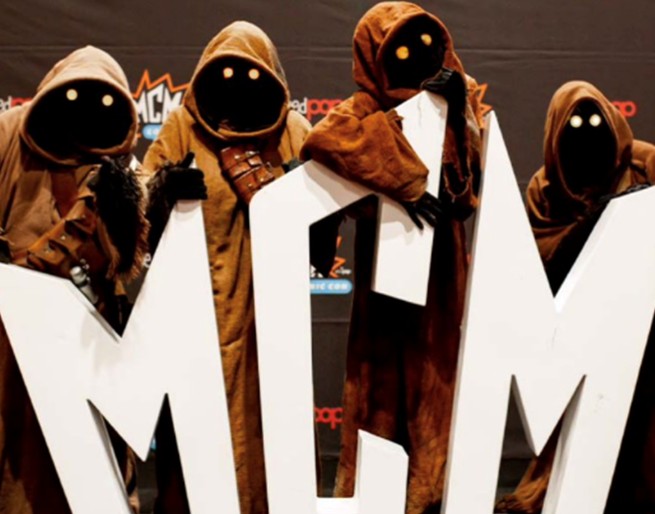
The Flâneur in cosplay: The Role of Cosplayers in creating immersion
Ada Marlen
DOI: https://doi.org/10.82392/fng0-2q25
Download a PDF version of this article
Abstract
The Flâneur is a “fashionable male idler, a leisurely stroller, an expert reader of urban signs” with a focus on sensory stimulus (Boutin, 2012: 124). Although separate from “false flâneurs such as idlers, gapers, and tourists” (Boutin, 2012: 127), the leisurely stroller reading signifiers in their environment may be utilised to increase immersion for the Comic Convention. Bennett (1995: 227) recognises a mutual flâneur as an attraction to the expo “simultaneously subject and object of vision, constantly open to the casual glance of other strollers.” In this regard, there is a pertinence to examine the draw for Comic Convention purely based on access to the viewing of cosplayers. While fan studies have alluded to this from the idea of queuing itself generating value (Hanna, 2019), there is little written on the value of cosplay as an object of flâneur itself. In this paper I will utilise my doctoral research fieldnotes from large scale UK Comic Cons to gauge the value of the flâneur in making a space more valuable. I will also examine the limits of this value, the effect of over-crowding on Conventions and whether cosplayers see being an object of the flâneur as labour. I will use the concept of the prosumer (or the consumer who also produces additional value), as defined by Ritzer (2015), alongside writings on crowding and density (Stokols, 1972) and existing writings of the exploitation of fan play (Stanfill, 2019) to interpret my fieldnotes further. This will allow for an overview how fans may be exploited, how this may be limited and what opinions fans themselves have on this exploitation.
Introduction
The economic value of Comic Conventions and their costumed attendees has been a focus in fan studies, albeit with varied results. Fans are described as courted by industries for being the ideal consumer while in a docile state, with a focus on reaction as an acceptable part of fan desire (Stanfill, 2019:103). Cosplayers, a portmanteau meaning to costume-play (Plunkett, 2014), are an incredibly visible example of this reaction which Conventions appear to capitalise on. Cosplayers are routinely the subject of advertising (see below) as an aspect of play that is visual and has been noted by those interviewed to be transformative of the general experience of Comic Con into a more enjoyable experience. This has also been noted too in fan studies as Seregina and Weijo (2016: 146) explain: “organizers [of conventions] promote the presence of cosplayers to attract visitors, but many cosplayers see this as cooptation rather than true appreciation.” As cosplayers see this promotion as cooptation, this indicates a visibility for their labour. That their time creating costumes by sewing, foamsmithing and 3D printing, has value as does their time in a Convention parading their costumes.
In examining the effect of value creation at Comic Conventions, fan theorists appear to have skirted around the effect of having large groups of fans congregating in one place. In terms of promotional items, Kohnen appears uninterested in exploring the advertising aspect of promotional content of being a “walking billboard” instead focusing on the emotional connection to fans (Kohnen, 2021: 169). There is writing on the value of crowds in teaching fans the etiquette through observation (Fleming, 2007: 67) and on lines in creating an aura of exclusivity in queueing fans (Hanna, 2019: 67). This indicates a visually stimulating experience where attendees in Comic Convention can influence the behaviour and experience of other attendees in the space. Fan activity at Comic Conventions is described as “relatively spontaneous outbursts of collectivity that fit comfortably with global media conglomerates’ logic of endless capital accumulation” (Hassler-Forest, 2016: 115). As such the spontaneous outbursts of play in terms of visual stimulus would be viable for examination in order to determine the value creation of fans at the Comic Convention.
Methodology
I used MCM London as a primary case study with comparisons from Megacon Live and MCM Birmingham utilising fieldwork and interviews obtained from my doctoral research into the commodification of play in fan spaces[1]. This data was achieved through auto-ethnographic practices in which I understood my identity as a member of the community as an inescapable part of my research. Auto-ethnography, originally meant to prompt those studied to volunteer information through open answers (Heider, 1975: 3) but is understood to mean native research (Ellis, C. 2004: 38). As a form of native ethnography, I interacted with cosplayers and fandom as a full member of the community. This data was generated through covert research, as I did not immediately volunteer my researcher status. Covert research is less ethical due to lack of consent in being recorded (Armstrong, 1993: 16; DeWalt and DeWalt, 2011: 26). This method was decided on due to the impracticality of trying to get informed consent from huge populations of people and the fact that this research was occurring in more or less public spaces.
Additionally, the data taken from participant research was as anonymous as it could be due to there being no identifiable characteristics present and thus lacked a high risk of negative consequence in participating unknowingly as a crowd in this study. All photos used in this paper will be of cosplayers taken by the Conventions themselves as part of their advertisement. It should be noted that Conventions tend to have a clause in their terms and conditions that the purchasing of a ticket implies consent for Convention photographers to use media of cosplayers for Conventions without compensation (MCM Comic Con, No Date B). Of course, formal interviews occurring outside of the event were performed with explicit consent through the signing of consent forms and check-ins throughout. This followed the semi-structured interview techniques which involve a set of questions that can be edited according to the interview participant (De Fina, 2019: 155). This was used to strategically alter questions to understand, present, and to ask interviewees to elaborate on presented concepts. Verbal encouraging prompts like ‘uh-huh’ or summarising feedback were also used to prompt further (DeWalt and DeWalt, 2011: 145-148).
MCM and the definition of Flâneur
The MCM London Comic Con occurs twice a year, in October and May and is one of the largest in the United Kingdom, boasting similar attendee numbers to the world-renowned San Diego Comic Con – 130,000 attendees (ReedPop, 2025; San Diego Comic Con, No Date). While neither offer exact information on their current attendance and the San Diego information is undated and therefore potentially old, this is still an impressive level of attendance. Although Comic Cons are routinely criticised for being overcrowded, there is evidence to suggest that cosplay crowds are a source of attraction in themselves. This is intensely connected to the role of leisure as a privileged and detached atmosphere, especially when examining “false flâneurs such as idlers, gapers, and tourists” (Boutin, 2012: 127). In this, the separation between a false idler and a true flâneur is class positioning. Both are idlers but one is fashionable and the other is a gaper, presumably meaning to gawp. The commonality is an active reading of urban signs, of the meanings of places and the construction of meaning.
Examining the flâneur as a leisurely stroller reading signifiers in Comic Conventions may be utilised to increase immersive potential and thus add value for the Convention. Bennett (1995) depicts the mutual flâneur in an expo as a crucial component. Regarding how people interact with an expo, Bennett states that the majority of people perform a flâneur in which they quietly examine displays. He is very clear that this is what appears to be the primary goal but that this takes up a surprisingly small amount of time, with other goals of strolling, talking and eating being clear. He also says that people could enjoy a more relaxed urban experience from this leisurely interaction. He states that the imaginary city of the expo centre has one purpose:
[the Convention exists] solely for the express purpose of relaxed strolling, for seeing and looking, everyone a flâneur but a flâneur on the move and, as simultaneously subject and object of vision, constantly open to the casual glance of other strollers. (Bennett, 1995: 227)
This relaxed urban experience of viewing and being viewed, of being subject (the one who views) and object (the one who is viewed), takes up the majority of people’s time at a Convention and is pleasurable in itself. This view of the flâneur is a departure from the traditional image as exclusively being the aloof viewer, creating a combination of flâneur and participant. This is visible in descriptions of the flâneur by Tholozany who contests that the flâneur can even engage with the subject he views:
As a spectator or an observer who carefully avoids any social or economic link with his surroundings while commenting upon and reflecting, perhaps condescendingly, upon these same surroundings, the flâneur can indeed be described as disengaged (Tholozany, 2012: 163).
A comparison with the flâneur might be understood traditionally as a false flâneur in that the visitor is viewed as a participant in the event. Crucially however, Bennett’s (1995: 232) depiction of the flâneur is an emulation of idealised bourgeois respectability. This leisurely and passive consumption of the sights within an expo is both voyeuristic and exhibitionist in that the attendee wants to view but crucially wants to be viewed. This is of course a false flâneur all the same as there is no disengagement from the subject material because they, the attendee, are the subject material also. This is not the authoritative observer who touches but does not allow himself to be touched (Tholozany, 2012: 165) but one who touches and desires to be touched in return. In this regard, it would be more accurate to say a mutual flâneur, as a model, is not a flâneur at all but an imitation. Bennett’s (1995) model of the mutual flâneur is unlike the standard definition of the flâneur and is instead connected with the environment, interacting as much as viewing and being a subject as much as object.
Stanfill (2019: 86) argues that “attending events is consumption—in the sense of taking in a product—even when no money changes hands.” They go further by relating cosplay to indirect forms of consuming fan desire (Stanfill, 2019: 154). The mutual flâneur would be both consumed and consumer in that they are the product other fans are ‘taking in’. Similar to Kohnen’s (2021: 169) comparison to fans as walking billboards or Winge’s (2019: 34) discussion of cosplayers as an exploitable commodity, this indirect consumption of the fan object is seen as valuable. Crucially, the cosplayer’s skill as a costume maker is also being consumed. Cosplayers’ costume making skills can transform them into microcelebrities in their own right (Seregina and Weijo, 2016: 144). As cosplayers routinely flicker between “participant and fan” (Winge, 2019: 14), this switch between consumer and consumed can be understood as consumption not only of the intellectual property represented but also of the other cosplayer. Cosplayers are routinely used as promotional material even though cosplayers appear to be wary of this as a form of co-optation as previously mentioned (Seregina and Weijo, 2016: 146). Stanfill (2019: 170-171) states that current industrial practices where fans’ motivation to participate puts fans at a disadvantage when all they can do is leave and anything they contribute is not the fans’ but the site owner’s property. Similarly, Comic Conventions stipulate that media taken of anyone purchasing a ticket can be used promotional purposes without compensation (MCM Comic Con, No Date B) or any clear way to request for the photo to be taken down. This media taken of fan bodies without explicit consent, indicates the commercial value of cosplayers in these sites which heavily use cosplay in their marketing[2]. If cosplayers produced no value, the Conventions would not use them as much. This highlights fan labour as a form of advertising value creation and distinguishes the fan flâneur from Tholozany’s (2012) flâneur, who remains disengaged from the economics of the space.
Returning to the fan as Bennett’s (1995) mutual flâneur, this form of consumption does not necessarily match the idler, tourist or gaper as these are all passive. Bennett’s (1995) experience of the expo also appears to be generalist and does not take into account expos catering to fan costuming or cosplay interests, people at once more visible and more interested in both performing and viewing. This enjoyment of the crowd is matched by the social theorist, Yi Fu Tuan (1979), who notes that the crowds at leisure events and protests act with an enjoyment of their shared social unity. When speaking of protest marches, Tuan (1979: 63) writes that “the young marchers surely also enjoy the camaraderie, the sense of group solidarity in a righteous cause, and the sheer pleasure of swimming in a sea of their own kind.” Additionally, Tuan mentions that the festival and carnivalesque atmosphere appears to create an absence of discomfort around crowding and tolerance for unpleasant conditions, concluding that crowds create entertainment in themselves. This suggests that the fan experience may be improved through the presence of other fans and the feeling of community that it might engender. This higher level of tolerance would explain Hanna’s (2019: 74-75) theorising that the line in queuing creates fans that readily cooperate with security forces in the space, taking on roles that security would normally have like reporting line jumpers, controlling traffic and answering questions normally directed to security. If this is the case, being in close proximity with other fans has the ability to actively encourage community policing in these spaces against members of their own community.
This obedience and active collaboration with the authorities in the space is hardly surprising as is their behaviour inside the Convention. As commercialist spaces operate under the logic of mass consumption, the easiest actions of the typical attendee would be to engage in consumerism. As Gabriel (2005: 22) states, “[o]nce enticed into the cathedrals of consumption, consumers are captive, like the docile queues of Disneyland. They have no choice but to observe, to look, to desire, to choose and to buy.” The Cathedrals of Consumption or Capitalism is used by several writers to refer to spaces of consumption (Presdee, 1985: 23; Fiske, 2003: 13; Ritzer, 2015: 417). This theme of religion lends a degree of ambience to these sites. While these sites present a religious quality to them, the expo presents more in that it is a utopian city of consumerism. This can be seen in the removal, paving over, and clean-up of undesirable and impoverished minority groups (Bennett, 1995: 212), it can also be seen in the modernising of a city’s inhabitants into bourgeois decency. As Bennett (1995: 225-226) notes that the expo is built from the fear of the rowdiness of the carnival or fairs where rowdiness and disorder were commonplace and instead built to be a civilising place for the tranquil flâneur without those seen as vulgar or dirty. As this framing implies, the flâneur contextualised here as middle class and taking in the sights of a ‘civilised’ city life. This is in contrast to the false flâneur occupying a working-class framing. In this regard, the voluntary removal of the ‘wrong’ sort of attendee—as seen in the readiness to snitch on queue jumpers—can be understood as a desire to reach a true and ‘civilised’ flâneur. Of course, both a false flâneur and flâneur in this case share key similarities in the case of cosplay at Conventions. They are both very visible and providing that they pay and do not appear to drive potential attendees away but manage to create what might be understood as an ‘immersive’ environment, then the profit motive of the organisers coincides neatly within both.
The limits of the Flâneur and crowds as a commodity at Comic Con
Returning to crowding, this aspect of disorder in being cramped and unsuitable for relaxed strolling as Bennett would describe (1995: 226) is present. Of course, the criticism by fans of Conventions being overcrowded indicates that there is a maximum level of tolerance in Convention crowding. This can be evidenced in one review for the Star Wars Celebrations Europe Convention,
The Convention was a massive cash grab, having paid hundreds to attend, it was really just about how much more they could get out of you. It was massively over sold, with crowds crammed in and queues for everything to the point you could [not] even look at stalls because of all of the queues (Muso800, 2023).
Given that one estimate for this Convention in 2016 was 60,000 attendees (Erbland, 2016), with plenty of time to grow in size, this was likely to have been very crowded as Muso800 suggests. It also implies the competing desire for a flâneur experience as understood by Bennett (1995) is challenged by the profit motive of the Convention organisers: to sell as many tickets as possible. Regardless, overcrowding clearly impacts the Comic Convention attendee experience negatively especially in artist alleys. The artist alley is a Convention feature in which fan creators and vendors pay for a table to sell their wares. One Convention goer in their video blog mentioned the artist alley being so cramped that they were unable to interact with the vendors in the way they wanted. The aisle between the tables meant that Convention traffic interrupted their ability to shop: “Maybe there was an artist I wanted to check but I couldn’t get to their table” (Kherm, 2025). Density in crowding is understood to only be an issue “when density restricts or interferes with individuals’ goals and activities that the environment will be perceived as crowded” (Eroglu et al., 2005: 1147). Therefore, it is reasonable to suggest that the creation of tight alleyways in points where attendees converge will create natural friction as the ability to leisurely browse is made more difficult.
Additionally, crowding of any type appears to be a negative to some fans. One retailer decided to stop setting up in San Diego Comic Con because his main customer base, mature collectors, were absent because of supposed intimidation of crowds (Salkowitz, 2019). In this regard, Comic Convention overcrowding can possibly disincentivise certain fan groups from attendance. As this customer base’s goal in a Convention space would be around browsing wares for potential collector’s items, crowds are directly antithetical to this and thus any crowding is guaranteed to be viewed negatively.
Another topic to discuss when regarding fan crowding would be the economic benefits to the host city that these events cause, as can be clearly seen through university articles on maximising Comic Con’s revenue for local hospitality (UCF Online, No Date). One article predicts Comic Con events to contribute billions of dollars to host cities (Salkowitz, 2019). In this argument, Comic Conventions benefit a host city due to an influx of fans. This is disputed by Bacon-Smith (1994: 32), who states that, “many fans never leave the hotel or conference centre during the entire Convention weekend.” It is worth highlighting that Bacon-Smith’s book is 30 years old and therefore, I will corroborate this with my own fieldwork. From my own experiences of fan spaces in the Convention, participation with the host city is often accidental, with travel and exploration built on convenience rather than for the purpose of experiencing the city. In other words, it is likely that for most businesses of the host city, there is unlikely to be a major economic boost. However, hotels, taxi services, restaurants, and bars are likely to experience an influx in customers. This is sometimes caused by the location of the Convention. In fact, the Comic Conventions of Megacon and MCM in Birmingham occur in the National Exhibition Centre (or the NEC for short), which is on the outskirts of Birmingham. In this regard, the economic boost that fans may contribute would likely be localised to the area of the Convention only, especially when there are no reasons for Convention goers to go into other parts of the city.
On the topic of small-scale business prioritisation over large businesses, one should note that the areas where large expo centres are would likely be built up which means chain restaurants and bars will be prevalent. Therefore, a large amount of the participation with the economy of a host city is with larger scale businesses rather than smaller ones. There are exceptions to this, with an example being the food trucks in MCM London, operating in the nearby Excel Marina strip by Western Gateway, as well as the use of Airbnb or other house sharing apps where local residents may profit from attendees. Hotels have clearly seen value in cosplay and have advertised to cosplayers directly (Premier Inn, 2024), indicating their economic value and benefit as a visible demographic. Examples such as these appear to be outliers and not the rule with chain establishments benefiting the most. I am unable to discuss in detail the validity of trickle-down economics, and the moral and ethical implications of prioritising small-scale local businesses in terms of benefiting local economies. As such, an examination of consumption pertaining to the host city’s economy within these spaces appears to be a fruitful area of further study. Regardless, there appears to be a limit to how a crowd of Comic Convention attendees can materially benefit smaller businesses in a host city.
There is also a counter in how the crowding might draw in undesirable elements. This has been the crux of my doctoral research, specifically how Conventions attempt to mitigate against less attractive fans and limit ways in which disruptive actions take place. Undesirable elements are defined not as a moral judgement but as what we can reasonably assume is a person the Convention would not want to attend. As the Conventions discussed are for profit (Companies House, No Date A & Companies House, No Date B.), we can reasonably assume that the Convention is interested in maximising economic return and therefore would resist those who do not contribute financially. Therefore, the undesirable Convention attendee is someone who reduces the Convention’s profits by either not buying a ticket or creating conditions where other attendees’ desire to spend money would be reduced. One participant theorised on this failure to buy tickets:
There are all a lot of cosplayers […] And actually, there’s a lot of cosplayers who throw an awful lot of money [at] their cosplays. There are a lot of people who don’t, you know, they have[n’t] got their £50/£60 [unintelligible]. Genshin Impact cosplay off of from China somewhere, you know, and they might not have an awful lot of money. And I kind of understand why. If you can have all the fun and not buy the ticket, why buy the ticket, I think it becomes beholden to say on the Convention runners to entice them back (Participant 5, Interview conducted by author).
This theory comes with a justification for this behaviour, of enjoying the Convention but not being interested enough to financially commit to a weekend ticket ranging between £97 to £201 (MCM Comic Con, No Date C). The understanding by Participant 5 is that this would outprice a cosplayer from more marginalised background, and he then argues that the Convention organisers must do more here to attract them back. For context, the Conventions like MCM London Comic Con make use of fences around the event itself. These appear to have been installed around Royal Victoria Square, or the Green as it is more well known, in 2018 following complaints about behaviour[3].
This space has been a site for afterparties in which narcotics and alcohol were consumed and even a fight club took place[4]. As a result of this fencing off of the closest green space, the attendees have moved further out in order to enact such after parties albeit at a muted degree. In regards to the Convention attendees, the fencing off of public spaces would have influenced how participants interact in the space. However, the isolating of less profitable fans likely does not have an effect on the space itself. Even if there are groups of cosplayers outside the event, they are still there in costume and thus will provide attraction to the event in a way that is less obstructive. The pleasures of the flâneur in idly taking in the sights of thousands of people in costume, are realised even if small groups of people do not purchase tickets. The non-attendee fan likely still takes photos outside and generally provides ambience in their own way. Additionally, the non-attendee can take part in the pleasures of the Convention. They may parade themselves, have their photo taken and take photos of others, without spending money. If the Convention is too crowded to enact the leisurely mutual flâneur of the expo experience, the outside becomes the only place to take in the pleasures of the Convention.
An interesting phenomenon was the security forces restricting cosplayers from taking photos near the site. Many people, once hearing about my research complained about this specifically in regards to Megacon London where Excel London security continuously stopped photographers and photoshoots happening on the strip or the lobby. It was theorised that this is because Megacon only rented the hall and thus the rest of the strip, being presumably private property, were out of bounds (Fieldnotes, Megacon Birmingham. March 2024. Doctoral research, unpublished). As the security’s role might be adequately suggested as maintaining the ordered consumption of the site itself, the given reason of the photoshoots being eliminated due to congestion makes sense. If this is correct, then the non-attendee may hinder the site through crowding outside.
Cosplay Play as Carnivalesque Attractions
The act of becoming both exhibitionist and flâneur is taken further with roleplay interactions that take place outside of the Conventions as evidenced below:
A full-on, in-character Peter Griffin (New England American accent and everything) from the cartoon series Family Guy, responded to people when talking to others and went outside of the lore of Family Guy in response to questions. ‘Hey Peter, who’s that with you?’ ‘This woman? I’m having an affair on Lois with her. I couldn’t stand Lois’ nagging.’ This prompted others (not cosplaying Family Guy but Warhammer 40,000 instead) to adopt the voice pattern of the character of Lois saying ‘Peter’ (Fieldnotes London MCM Comic Con. May, 2024. Doctoral research, unpublished)
This example shows the typical ways in which the roleplay performances may occur. This aspect of roleplay was clearly pleasurable for the people involved, providing a pull to the event itself. This is hardly the ‘civilised’ bourgeois understanding of the flâneur but one that would be considered indecent, open promoting infidelity and making a private relationship public. Nevertheless, in this we see the range of ways in which the cosplayer acts and reacts to others in the outskirts of fan spaces. There is an increased ability to engage with each other in more meaningful ways. Those with more familiarity (presumably the Peter cosplayer and the woman travelling with him) are able to engage in more intimate roleplay. Similarly, those a working knowledge of the intellectual properties within the subculture (the Warhammer cosplayers addressing him by “Peter”) will be able to generate a response allowing for the cosplayer to commit to full characterisation. Contrast this with the following example I recorded in one of my fieldnotes:
There was one notable moment when returning home where I happened to be going the same way as two other cosplayers who were routinely asked, and posed for pictures by non-attendees. This was several tube stops away from the Convention itself and we were the only cosplayers around (Fieldnotes Megacon London. January, 2025. Doctoral research, unpublished).
This of course does have elements of the carnivalesque to it, described by Bakhtin (1984: n.pag.) as a suspension of “laws, prohibitions, and restrictions that determine the structure and order of ordinary, that is noncarnival.” Cosplayers, by being visible and playful, create a carnival atmosphere even when divorced from the Convention. This aspect of cosplayers being incredibly visible in the ordinary reinforces their carnivalesque value.
The cosplayers here prompted people who are not members of the Comic Convention to perform acts that are typically not in the spirit of ordinary life, by interrupting strangers to take photos of them. While this is not the flâneur in the sense that the non-attendees are far more active than passive, their interactions demonstrate how the presence of cosplayers can change the behaviour of others in these environments. Contrasting this with the Warhammer and Peter Griffin cosplayers, the response is interesting. The cosplayers far away from the Convention are outside of their environment and posed for photos but had no impactful experience beyond quickly getting in-character for the photo. In this regard, a mutual flâneur might not be the aim but to have what may be more meaningful interactions with likeminded people. To be visible to non-likeminded people can actually be unpleasant for cosplayers as one of my informants suggests. This renowned and world award winning cosplayer recounted a situation at the NEC in Birmingham where an elder ‘conservative’ couple who were there for a motor show and displayed what they might have understood as a polite interest. In this cosplayer’s eyes, it was patronising, for one key reason. They were never interested in him or the skill and work that went into his art nor did they have the subcultural knowledge in foamsmithing and costume making to appreciate this. He was instead reduced into a childish curiosity.
Even just talking to people who [I] have never met before, if they’ve got the shared interest like they’re interested in cosplay, we immediately can bond over that. But when it’s like an old man and lady who are in the middle of Birmingham who wanna go to a motor show, it’s like look ‘we don’t need to talk. We don’t need to try and be friends. We don’t have anything in common at all. Where are we going with this right now? Like I get you’re trying to be friendly or make conversation, but I’ll be much happier standing in the lift, not talking to anyone’ (Participant 19, Interview conducted by author).
In this regard, even though this might be understood to be symbolically closer to the bourgeois aesthetics of the expo, this fails because the politeness is understood as a façade. The laughable false interest of people who very clearly have nothing in common, exposes the utopian city for what it is, imaginary. The failure of the couple to understand that their interest in luxury cars was seen in the same way that they saw cosplay reinforces the barrier between those who are seen as otherwise respectable and those who are not. There is also another aspect in this, to be brought out of the atmosphere by having to explain your purpose. This is evidenced by one informant who travels in plainclothes on trains but brings their cosplay puppet.
So you obviously you get looks when you’re out and about. You get weird looks and a lot of the interaction you get is like ‘what’s going on? Why is everyone in costume and stuff’. And those interactions I find more difficult to manage than just interacting with someone as though I’m a silly little guy in a character because I have to explain the reasoning behind things and like why we’re here, what we’re doing and stuff. Whereas if I can just like wave at someone with a puppet and they’ll immediately wave back at me, then that’s all of the stress of the situation gone. Like there’s brevity there (Participant 12, Interview conducted by author).
In this regard, being taken out of a soft characterisation of playfulness becomes the point at which the cosplayer feels uncomfortable. The cosplayer is forced to confront the blunt and clear display that the other has no understanding of cosplay, no interest and no desire to engage with cosplayers on their terms. The experience of interactive play being acceptable with non-participants indicates that it is purely the failure to interact with the cosplayer on their own terms that causes this discomfort. The end result of the playful scenario would most likely create a pull for both non-attendees and the cosplayer themselves to the Convention. However, any interaction which emphasises the differences with non-attendees creates a push effect, where the cosplayer’s experience is negatively affected and the other is unlikely to attend. This far more active experience, to not simply take in signs from cosplayers but to actively engage with them regardless of whether the encounter is pleasant, is shown to be more memorable. Additionally, others witnessing the encounter could also experience this in a pleasurable way.
Crawford and Hancock (2018: 313) argue that cosplayers enjoy audiences but only non-threatening ones in a safe space and often prefer that audience to be fellow cosplayers. By taking the cosplayer out of their playful routine to ask them about what they are doing, the audience would be threatening their right to exist in the space by reinforcing that the cosplayer does not fit in. The cosplayer inviting non-cosplayers into a playful routine takes on risk but this roleplay appears to engender safer responses than not performing. Regardless, the conversation around interactions should address that this is incredibly rare and most cosplayers will likely not have interactions with non-attendees in an event. These moments of impromptu roleplay are not guaranteed. As a result, degrees of mutual flâneur become the only universal experience for attendees who are drawn to cosplay.
There is evidence to indicate that cosplayers gain more confidence when around visible cosplayers in transit. When asked about the genre of cosplay photography of cosplayers in transit, participant 12 said the following
It’s great. It’s absolutely hilarious to see, like, cosplayers doing normal things is a sub genre of photographs I really love. And seeing other people like, you still, you still feel that, that connection. You feel that [there is] a Convention where you’re like-minded individuals. So, it’s a like a kinship with camaraderie on the other side of the DLR [Docklands Light Railway] amongst all these normal people (Participant 12, Interview conducted by author).
This kinship when surrounded by ‘normal’ people indicates that cosplayers feel more comfortable being visible to cosplayers. This connection shows an immediate sharing of sub-cultural capital through the visible common purpose, similar to the sense of camaraderie when with likeminded people as Tuan (1979: 63) posits. It might be suggested to be that social constraint through being subject or viewed as other is why the cosplayer feels camaraderie in not being the only cosplayer:
[I]magine a shy man practising the piano in the corner of a large room. Someone enters to watch. Immediately the pianist feels spatial constraint. Even one more person can seem one too many. From being the sole subject in command over space, the pianist, under the gaze of another, becomes one object among many in the room. He senses a loss of power to order things in space from his unique perspective (Tuan, 1979: 59).
As cosplayers might feel like an object of viewership in the eyes of others, the limiting of power through being observed by non-cosplayers becomes either unsafe or profoundly patronising. The view of other cosplayers then creates a more equal footing where it becomes less socially obstructive to be in costume in transit. The ‘normal people’ becoming less of a majority or a minority reverses the feeling of patronising or lack of safety. Just as Participant 12 disrupts the subject/viewer dynamic by having their puppet wave at people, the cosplayers being in the presence of other cosplayers creates a kinship reducing the feeling of merely being an object of visual consumption.
Conclusion and findings
We have examined how fans are interpreted by fan studies theorists pertaining to exploitation. The fan flâneur is useful in understanding how this exploitation might be shaped by the act of being part of the crowd at a Comic Convention. The rights over fan images by the Convention organisers in marketing and the lack of compensation was also discussed, showing a clear economic value that fan bodies create in media. The criticism of the fan flâneur’s viability has been addressed. In the strictest terms, a fan or mutual flâneur is a contradiction. In situations of overcrowding, the ability to be a mutual flâneur as described by Bennett (1995) becomes either difficult or impossible. The crowd density served to block potential browsers in the traders’ row or artist alley generates negative reactions from attendees, placing blame on the organisers. This indicates that attendees understand the organisers’ profit motive of having as many tickets sold as possible in contrast with the bourgeois values of an event that is relaxed and leisurely. This negative feeling of being unable to leisurely browse is described alongside feeling reduced to a commercial value. As seen in the complaints of fans, while fan tolerance may be higher, it is not inexhaustible.
Flâneurs who do not pay and undesirable fans are also addressed and argued to be an unviable form of resistance as they may not contribute economically but still contribute to the immersion of an event. Additionally, undesirable fans are removed, suggesting they are considered sufficiently problematic to warrant exclusion. It should be noted, however, that this is universal: when an event ends, all fans and attendees—regardless of loyalty—are required to leave once their use value has been exhausted. Finally, the article discusses how fans understand themselves in regard to well-meaning but patronising outsiders. The understanding is that these interactions symbolically fail because of an unsuccessful or refused attempt to engage the fan on their terms. This may create negative reactions. Engaging with people knowledgeable in the subject, asking for pictures or accepting playful engagements resulted in more positive experiences.
As a result of this, it is reasonable to assume that cosplay as value creation extends beyond being simply a walking billboard for intellectual properties of which they are representatives. The question of how fans create value for the space itself appears to be under researched beyond the money that attendees bring to a host city. According to Bacon-Smith (1994), this economic benefit is mostly restricted to the immediate area of the Convention. When fans do venture out, this appears to be an attraction within itself, the playful engagements becoming an attraction of the host city. In this is a contradiction of sorts and raises the question, when fans are isolated from the Convention, do they contribute to the host city? Since Bacon-Smith’s (1994) foundational work on fan conventions, there have been significant increases in crowding which affects the way in which attendees navigate the space. While the Convention provides a focusing point where ease of access will dictate how one interacts with the site, the crowding could mean that fans might spread out from the centre when socialising. With this said, many cosplayers in social events I have attended appear to de-costume. These socials were near the site itself. One could predict that cosplayers who travel further are more likely to remove their costume to prevent issues. As Participant 12 travelled in plainclothes to and from Conventions, this would make sense and indicate that the discomfort of being alone in costume is enough of an incentive to be un-costumed outside of the event. Cosplayers being un-costumed would thereby remove themselves as cosplay attractions outside of the event. Therefore, the attraction of cosplay to the host city is mostly restricted to the proximity of the Convention centre.
In terms of further research, there are a few areas that would bolster this line of query. While the flâneur is important in further study, the delicate balance that Convention organisers manage in maximising attendees versus engendering desirable expo etiquette could be examined further. Additionally, quantitative studies into attendees costuming habits, travelling methods, and social activities outside of the Convention would yield further insight to how exactly attendees affect a host city.
About the author
Ada Marlen is a doctoral researcher and performer with the University of South Wales. Their research interests are aligned along play and commodification in participatory cultures and the exercising of political awareness in these spaces. They are interested in creating LARP projects which challenge the undervaluation of fan time and allow fans to question their position in this hierarchy.
References
Armstrong, G. (1993) ‘Like that Desmond Morris?’. In: Hobbs, D. and May, T., eds. Interpreting the Field: Accounts of Ethnography. New York: Oxford University Press, pp. 3–43.
Bacon-Smith, C. (1994) Enterprising Women: Television Fandom and the Creation of Popular Myth. Philadelphia: University of Pennsylvania Press.
Bakhtin, M. (1984) Problems of Dostoevsky’s Poetics. Translated by Emerson, C. London: University of Minnesota Press.
Bennett, T. (1995) The Birth of the Museum. London: Routledge.
Companies House (no date a) Reed Exhibitions LTD. Available at: https://find-and-update.company-information.service.gov.uk/company/00678540 [Accessed 5 August 2025].
Companies House (no date b) Malo Events. Available at: https://find-and-update.company-information.service.gov.uk/company/10786163 [Accessed 5 August 2025].
Crawford, D. and Hancock, D. (2018) Urban poachers: cosplay, playful cultures and the appropriation of urban space. Journal of Fandom Studies, 6(3), pp. 301–318. DOI: https://doi.org/10.1386/jfs.6.3.301_1.
De Fina, A. (2019) The ethnographic interview. In: Tusting, K., ed. The Routledge Handbook of Linguistic Ethnography. London: Routledge, pp. 154–167.
DeWalt, K. M. and DeWalt, B. R. (2011) Participant observation: a guide for fieldworkers. 2nd edn. Plymouth: AltaMira Press.
Ellis, C. (2004) The Ethnographic I: A Methodological Novel about Autoethnography. Oxford: AltaMira Press.
Erbland, K. (2016) Star Wars Celebration: What Other Studios And Festivals Can Learn About Balancing Art And Fan Service. IndieWire. Available at: https://www.indiewire.com/features/general/star-wars-celebration-europe-2016-art-fan-service-1201706742/ [Accessed 5 August 2025].
Eroglu, S. A., Machleit, K. and Barr, F. B. (2005) Perceived retail crowding and shopping satisfaction: the role of shopping values. Journal of Business Research, 58, pp. 1146–1153. DOI: https://doi.org/10.1016/j.jbusres.2004.01.005.
Fiske, J. (2003) Reading the Popular. London: Routledge.
Fleming, K. L. (2007) Participatory Fandom in American Culture: A Qualitative Case Study of DragonCon Attendees. PhD. Thesis. University of South Florida. Available at: https://digitalcommons.usf.edu/etd/707 [Accessed 3 December 2025].
Gabriel, Y. (2005) Glass Cages and Glass Palaces: Images of Organization in Image-Conscious Times. Organization, 12(1), pp. 9–27. DOI: https://doi.org/10.1177/1350508405048574.
Hanna, E. (2019) Only at Comic-Con: Hollywood, Fans, and the Limits of Exclusivity. New Brunswick: Rutgers University Press.
Hassler-Forest, D. (2016) Science Fiction, Fantasy, and Politics: Transmedia World-building Beyond Capitalism. London: Rowman & Littlefield International.
Heider, K. G. (1975) What Do People Do? Dani Auto-Ethnography. Journal of Anthropological Research, 31(1), pp. 3–17. Available at: http://www.jstor.org/stable/3629504 [Accessed 5 August 2025].
Kherm (2025) CON VLOG | MCM LONDON | Oct ’24, they definitely oversold their tickets.
Available at: https://www.youtube.com/watch?v=_yB_hvaLjAs [Accessed 5 August 2025].
Kohnen, M. E. S. (2021) The Experience Economy of TV Promotion at San Diego Comic-Con. International Journal of Cultural Studies, 24(1), pp. 157–176. DOI: https://doi.org/10.1177/1367877920935888.
MCM London Comic Con (2019) Facebook, 14 March. Available at: https://www.facebook.com/photo.php?fbid=2620389858034937&id=201102256630388&set=a.386083234798955 [Accessed 5 August 2025].
MCM Comic Con (no date a) Home. Available at: https://www.mcmcomiccon.com/london/en-us/home.html [Accessed 14 June 2022].
MCM Comic Con (no date b) Terms and conditions. Available at: https://www.mcmcomiccon.com/london/en-us/terms-and-conditions.html#accordion-c37e179852-item-4b10a26dae [Accessed 7 November 2025].
MCM Comic Con (no date c) Priority Tickets. Available at: https://www.mcmcomiccon.com/london/en-us/tickets.html [Accessed 5 August 2025].
Muso800 (2023) Poor layout, I didn’t feel safe, it’s all about the money. Available at: https://www.tripadvisor.co.uk/ShowUserReviews-g186338-d632458-r885607118-ExCeL_London-London_England.html [Accessed 8 January 2024].
Plunkett, L. (2014) Where the Word “Cosplay” Actually Comes From. Available at: https://kotaku.com/where-the-word-cosplay-actually-comes-from-1649177711 [Accessed 14 June 2022].
Premier Inn (2024) 1 million rooms at £45.
Available at: https://www.youtube.com/watch?v=YchyVuAqSFQ [Accessed 2 December 2025].
Presdee, M. (1985) The Consumers who can’t consume. The Australian Society, 4(11), pp. 22–24.
ReedPop (2025) MCM Comic Con Attended By Over 270,000 in 2024. Available at: https://www.mcmcomiccon.com/global/en-us/blog/entertainment/mcm-attended-by-270000-in-2024.html [Accessed 3 June 2025].
Ritzer, G. (2015) Prosumer Capitalism. The Sociological Quarterly, 56, pp. 413–445. https://doi.org/10.1111/tsq.12105.
Salkowitz, R. (2019) Comic-Con At 50 Looks Back To Its Roots And Ahead To Its Future. Forbes, 15 July. Available at: https://www.forbes.com/sites/robsalkowitz/2019/07/15/comic-con-at-50-looks-back-to-its-roots-and-ahead-to-its-future/ [Accessed 13 May 2022].
San Diego Comic Con (no date) ABOUT COMIC-CON INTERNATIONAL. Available at: https://www.comic-con.org/about/ [Accessed 3 June 2025].
Seregina, A. and Weijo, H. A. (2016) Play at Any Cost: How Cosplayers Produce and Sustain Their Ludic Communal Consumption Experiences. Journal of Consumer Research, 44(1), pp. 139–159. DOI: https://doi.org/10.1093/jcr/ucw077.
Stanfill, M. (2019) Exploiting Fandom: How the Media Industry Seeks to Manipulate Fans. Iowa City: University of Iowa Press.
Tholozany, P. D. (2012) Chronicles of Clumsiness: Hyperopic Flâneurs and Myopic Bourgeois in the Streets of Nineteenth-Century Paris. Dix-Neuf, 16(2), pp. 162–180. DOI: https://doi.org/10.1179/12Z.00000000015.
Tuan, Y. F. (1979) Space and Place: The Perspective of Experience. Minneapolis: University of Minnesota Press.
UCF Online (no date) Comic Conventions: Their Popularity and Impact. Available at: https://www.ucf.edu/online/hospitality/news/comic-Conventions-their-popularity-and-impact/ [Accessed 13 May 2022].
Winge, T. M. (2019) Costuming Cosplay: Dressing the Imagination. London: Bloomsbury Publishing.
[1] This is yet to be published.
[2] It should be noted that my experience of this comes from being photographed for a Convention and finding out later that my face was on their socials. As there are children in the photograph, I chose not to include this photo in the paper. This inability to opt out and the photographing of under 18’s is certainly a valuable line of inquiry in fan studies.
[3] This is indicated by one customer referencing the fences bitterly in one comment on the MCM feedback page. As this was posted in the run up to the May event, the previous event in question would have been in October 2018. For more information, please see MCM London Comic Con, 2019.
[4] This was relayed to me in the initial explorations of the field before I officially began my research, this was a key point attendees spoke on when I explained what I was researching and asking about the fencing off of the Royal Victoria Square. Interestingly, a ‘fight’ occurred during the event on this space where a Kumamon and Pikachu mascot both charged into each other until one fell over. This was refereed by a cosplayer with a speaker set and became a source of delight with one attendee excitedly exclaiming “Fightclub’s back!” As this happened inside the Convention boundaries during the event, it is safe to assume that only attendees were participating either as contestants or spectators.